The New Capital Corridor: How Abu Dhabi and Dubai Became the Financial Pivot for Investments in Africa
#UAE
For decades, multinational companies, private equity funds, and global financial institutions looking to invest in Sub-Saharan and Northern Africa turned to historic hubs like London, Paris, or specialized offshore jurisdictions like Mauritius. However, the map of global finance is undergoing a profound geopolitical and economic reconfiguration.
Today, the true center of gravity for structuring, financing, and protecting Foreign Direct Investments (FDI) directed toward the African continent has permanently shifted to the Persian Gulf. The United Arab Emirates (UAE), through its two economic and political capitals—Dubai and Abu Dhabi—has established itself as the most dynamic and strategic financial and logistics hub for the African continent.
Macroeconomic data confirms the magnitude of this phenomenon. In 2025, non-oil trade between Dubai alone and Africa exceeded 146 billion dollars, registering a year-on-year growth of 51% and a record increase of 325% over the last decade. Concurrently, the number of active African companies registered with the Dubai Chamber of Commerce has surpassed 30,000 units, demonstrating that the Gulf-Africa corridor is no longer a one-way street, but a bilateral platform for exchange and growth.
Below, we analyze in depth the financial, legal, and logistical architecture that allows Dubai (via the DIFC) and Abu Dhabi (via the ADGM) to operate as an irreplaceable pivot for global companies investing in Africa.
1. The Financial Architecture of the Two Hubs: DIFC vs. ADGM
The success of the United Arab Emirates as a financial hub for Africa is not accidental; it is the result of extraordinary regulatory planning that led to the creation of legal “enclaves” based on English Common Lawwithin a state otherwise governed by Civil Law. Global companies choosing the UAE as a base for their corporate vehicles directed at Africa operate primarily through two international financial centers: the Dubai International Financial Centre (DIFC) and the Abu Dhabi Global Market (ADGM).
While both offer 100% foreign ownership, full capital repatriation, and a highly competitive tax environment, they present distinct specializations and operational philosophies tailored to different investor needs.
The Dubai International Financial Centre (DIFC)
Founded in 2004, the DIFC is the veteran of the region’s financial markets and consistently ranks among the top ten global financial centers today. Regulated by the Dubai Financial Services Authority (DFSA), the DIFC has developed its own independent and sophisticated legal hierarchy modeled on international best practices (such as IOSCO principles and British FCA standards).
For companies investing in Africa, the DIFC represents the hub of commercial liquidity and networking. It hosts over 370 primary asset management firms and funds (including more than 100 globally significant hedge funds), alongside a dense network of investment banks, international advisory firms, and corporate governance experts. The DIFC is ideal for multinationals that require a mature ecosystem for listing securities, issuing debt, and structuring banking syndicates to finance major infrastructure projects in Africa.
The Abu Dhabi Global Market (ADGM)
Established in 2015 on Al Maryah Island and recently expanded to Al Reem Island, the ADGM took an even more direct regulatory approach: it applies English Common Law directly within its statutory framework. Regulated by the Financial Services Regulatory Authority (FSRA), the ADGM stands out for its exceptional structural flexibility and cost-efficiency, elements that have made it the preferred hub for creating Special Purpose Vehicles (SPVs), corporate holdings, and family offices.
In recent years, wealth management growth in the ADGM has been meteoric, attracting alternative fund managers and private equity firms focused on African infrastructure and mining sectors. The ADGM also offers strong strategic proximity to Abu Dhabi’s massive Sovereign Wealth Funds (ADIA, Mubadala, ADQ), which collectively hold assets worth approximately 1.7 trillion dollars and are increasingly active in co-investments on African soil.
Feature
Dubai International Financial Centre (DIFC)
Abu Dhabi Global Market (ADGM)
Year of Foundation
2004
2015
Regulatory Authority
DFSA (Dubai Financial Services Authority)
FSRA (Financial Services Regulatory Authority)
Legal Framework
Autonomous Common Law (codified by the DIFC)
Direct application of English Common Law
Strategic Focus
Commercial banks, capital markets, large multinationals, Hedge Funds
Holdings, SPVs, Venture Capital, Fintech, Sovereign Funds & Family Offices
Competitive Edge for Africa
Massive networking ecosystem, immediate liquidity, global logistics hub
Flexible corporate structures, setup cost efficiency, proximity to Sovereign Wealth Funds
2. Why Companies Choose the UAE to Invest in Africa: The Core Drivers
The routing of Western and Asian capital through Dubai and Abu Dhabi structures before reaching Johannesburg, Nairobi, Lagos, Luanda, or Addis Ababa is driven by a series of structural advantages that mitigate the intrinsic risks of investing in emerging African markets.
Political Risk Mitigation and Legal Certainty
Investing directly in certain African jurisdictions can expose companies to regulatory instability, de facto expropriation, or local court inefficiencies during commercial disputes. Establishing a holding company or an SPV in the DIFC or ADGM ring-fences the investment under the protection of independent UAE commercial courts, which operate in English and apply Common Law.
Judgments issued by DIFC or ADGM courts enjoy high international enforceability. Furthermore, the United Arab Emirates has developed an extensive network of Bilateral Investment Treaties (BITs) with dozens of African nations. These treaties offer superior legal protection to UAE-based companies, guaranteeing immunity from discriminatory treatment and providing direct access to independent international arbitration (such as ICSID or the PCA in The Hague).
Tax Optimization and a Comprehensive DTAA Network
The UAE tax regime remains among the most attractive in the world for corporate finance. Despite the introduction of the federal corporate tax, qualified funds and corporate structures within the DIFC and ADGM benefit from a 0% rate on capital gains and dividends derived from foreign participations, alongside zero withholding taxes on profit repatriations.
Added to this is the UAE’s strategic geopolitical and economic tool: the systematic signing of Double Taxation Avoidance Agreements (DTAAs) with major African markets (including Egypt, Nigeria, Kenya, Morocco, Algeria, Ethiopia, and many SADC states). This DTAA network allows multinationals headquartered in Dubai or Abu Dhabi to drastically reduce local withholding taxes on dividends, interest, and royalties paid by African subsidiaries to the parent company, optimizing the project’s overall Internal Rate of Return (IRR).
Geopolitical Neutrality and the Solution to Banking De-Risking
In recent years, international European and US banks have implemented strict de-risking policies, limiting correspondent banking relationships with Sub-Saharan African financial institutions due to AML/CFT (anti-money laundering and countering the financing of terrorism) compliance costs. This has created a severe dollar and euro liquidity crisis for many African companies and multinationals operating on the continent.
The United Arab Emirates, by maintaining a position of strict geopolitical neutrality and strictly aligning with FATF recommendations—which led to the country’s formal exit from the “grey list”—acts as the perfect “clearinghouse.” Global companies can raise capital in dollars, euros, or dirhams in the UAE, deposit them in highly capitalized Emirati banks, and channel them toward African projects with due diligence standards accepted by both Western and Asian markets. Dubai and Abu Dhabi represent the ideal meeting point for capital originating from China, India, the United States, and Europe directed toward the same African project.
3. The Role of Integrated Logistics and State Conglomerates
A financial hub cannot thrive in a vacuum; it requires real physical connectivity to support the movement of goods and people. The combination of finance and logistics is the element that makes the UAE’s value proposition unbeatable compared to purely financial competitors like Mauritius or Luxembourg.
Logistics Synergy: DP World and AD Ports Group
The UAE’s economic projection into Africa is expressed through the massive presence of its infrastructure and logistics giants operating along the continent’s coastlines and primary trade routes:
DP World (Dubai): Manages a vast network of seaports, inland terminals, and logistics platforms in key locations such as Egypt (Sokhna), Senegal (Dakar), Angola (Luanda), Mozambique (Maputo), Somalia (Berbera), and Rwanda (Kigali). DP World does not just move cargo; it creates digitalized, integrated trade corridors linking the Jebel Ali Free Zone (JAFZA) in Dubai directly with inland African markets.
AD Ports Group (Abu Dhabi): Is pursuing a mirroring, aggressive strategy. The recent 30-year concession to manage the Luanda terminal in Angola, together with agreements to develop port and river infrastructure in the Republic of the Congo, Egypt, and Tanzania, demonstrates Abu Dhabi’s commitment to securing the supply chain of Southern and Eastern Africa.
For an international company, this integration means being able to manage corporate finance from the ADGM or DIFC, knowing that the physical flows of their goods in Africa transit through infrastructure controlled by the same UAE sovereign actors. This drastically reduces transaction costs, customs clearance times, and supply chain disruption risks.
Air Connectivity and Human Capital
The success of an investment in Africa requires the physical presence of managers, engineers, and consultants. Flag carriers Emirates (from Dubai) and Etihad Airways (from Abu Dhabi) offer unparalleled aerial coverage across the African continent, connecting major global financial centers (London, New York, Singapore, Beijing) daily with over 40 African destinations via a single stopover in the UAE.
This has allowed Dubai and Abu Dhabi to become the preferred residential base for C-Level executives and regional directors of multinationals operating in Africa: managers can live in a safe, cosmopolitan environment equipped with world-class services, while remaining just a few hours’ flight away from their operational assets in Lagos, Nairobi, or Addis Ababa.
4. Key Sectors for Capital Channeled Through the Gulf
The inflow of capital transiting from the UAE to Africa concentrates primarily on four high-growth industrial macro-sectors critical to the continent’s economic transition.
Infrastructure and Renewable Energy
Africa’s infrastructure deficit is estimated by the African Development Bank to exceed 100 billion dollars per year. Corporate vehicles based in Abu Dhabi and Dubai are at the forefront of bridging this gap, particularly in the clean energy sector.
Masdar, Abu Dhabi’s flagship renewable energy arm, has committed billions of dollars to develop large-scale wind, solar, and hydroelectric projects in nations like South Africa, Egypt, Zambia, and Morocco. Similarly, Dubai-based private operator AMEA Power is rapidly expanding its clean electricity generation capacity in Togo, Kenya, and Ivory Coast, structuring project finance deals directly through the DIFC banking ecosystem.
Agribusiness and Food Security
For GCC (Gulf Cooperation Council) countries, food security is an absolute strategic priority given the scarcity of arable land on the Arabian Peninsula. Africa possesses approximately 60% of the world’s remaining uncultivated arable land.
UAE agro-industrial companies are investing heavily in large-scale commercial farming, irrigation systems, and cold chain logistics across Eastern and Western Africa. These investments are structured via flexible, tax-exempt financial vehicles in Abu Dhabi and Dubai, creating a vertical value chain: Emirati capital finances agricultural production in Africa, DP World or AD Ports logistics transports it, and Gulf (and global) markets absorb the yield.
Fintech and Digital Financial Services
Africa is the undisputed global leader in mobile money penetration and fintech innovation (e.g., legacy platforms like M-Pesa). In recent years, Dubai and Abu Dhabi have become natural magnets for Venture Capital directed at African tech startups.
The DIFC FinTech Hive and the ADGM’s Digital Lab offer advanced regulatory sandboxes where African fintech startups can establish holding companies to raise capital from international venture capitalists based in the Gulf. Dubai’s forward-thinking regulation of digital assets via VARA (Virtual Assets Regulatory Authority)has also made the UAE the preferred global hub for hybrid funds investing in both traditional finance and Web3 solutions or digital cross-border remittances for Africa.
Tourism, Hospitality, and Urban Development
The tourism and hospitality sector in Africa is experiencing unprecedented expansion, driven by middle-class growth and rapid urbanization. During the renowned UAE Africa Tourism Investment Summit, the UAE Ministry of Economy announced a 6 billion dollar investment plan destined for the African tourism and hospitality sector, projected to create over 70,000 jobs across the continent.
Large real estate and hotel management groups based in the UAE utilize the financial platforms of Dubai and Abu Dhabi to finance the construction of ecotourism resorts, business hotels, and hospitality infrastructure in over 50 African nations, capitalizing on the post-pandemic growth of elite tourism and transcontinental business travel.
5. Challenges, Risk Management, and Best Practices for Businesses
Despite the undeniable benefits, utilizing Abu Dhabi and Dubai as an investment hub for Africa requires rigorous planning and an understanding of existing operational challenges.
Economic Substance and International Compliance
Following the UAE’s alignment with OECD guidelines regarding BEPS (Base Erosion and Profit Shifting), companies establishing holdings or SPVs in Dubai or Abu Dhabi cannot simply create “shell companies” (letterbox companies) lacking a real link to the territory.
To legally benefit from double taxation treaties (DTAAs) and local tax exemptions, companies must demonstrate compliance with Economic Substance Regulations (ESR). This implies:
Having an adequate number of qualified full-time employees residing in the UAE.
Incurring proportionate operational expenses within the State.
Holding Board of Directors meetings physically in Dubai or Abu Dhabi, with strategic decisions recorded locally.
DP Group specializes in helping global companies properly structure this substance, ensuring full international compliance and preventing challenges from tax authorities in home countries or recipient African nations.
Which to Choose: DIFC or ADGM?
Companies planning an entry into the UAE-Africa corridor must carefully evaluate where to establish their financial presence:
Choose the DIFC if: The primary goal is access to a massive commercial network, cooperation with large established international banking institutions, raising capital via regulated equity or debt markets, and embedding within a financial ecosystem consolidated for over twenty years.
Choose the ADGM if: The priority is corporate flexibility and speed of execution (e.g., flexible structuring of cascading SPVs for complex mining or infrastructure assets), the pure and direct application of English Common Law to reassure institutional investors, optimizing initial setup costs, and strategic proximity to state investment funds and large Abu Dhabi Family Offices.
The transformation of Abu Dhabi and Dubai into preferred financial hubs for investments in Africa represents one of the most significant shifts in 21st-century economic geography. The integration of stable Anglo-Saxon legal systems (Common Law), highly competitive corporate taxation, immense regional sovereign liquidity, and an integrated logistical and aerial network has created a one-of-a-kind ecosystem. For global corporations, utilizing the United Arab Emirates as a launching pad into Africa is no longer a mere aggressive tax planning option, but rather a strategic risk mitigation choice. By enabling the free and protected flow of capital between the West, Asia, and the African continent, Dubai and Abu Dhabi confirm their status as the true financial capitals of the new global trade route, ready to drive the industrial, technological, and infrastructural development of the continent of the future.
DP Group is ready to support companies, institutional investors, fund managers, family offices, and international financial institutions through the entire lifecycle of their presence in the UAE. From initial structuring—analyzing jurisdictional options, governance design, preparing documentation for ADGM or DFSA licensing—to ongoing operational management, including regulatory compliance, reporting to supervisory bodies, and managing relationships with the FSRA and DFSA.
The local team at DP Group holds direct expertise in the areas that impact financial operators most: ADGM and DIFC corporate law, Emirati financial regulation, tax law (Corporate Tax, VAT, Transfer Pricing), and AML/CFT regulations. This combination of skills allows us to offer a genuinely integrated service—not a collection of isolated specialists, but a team that masters the intersections of the different areas of law that define a financial institution’s daily experience in the UAE.
Our physical presence in the Emirates, combined with an international network of Advisors in key European and Asian jurisdictions, positions us as the ideal partner for multi-jurisdictional structures requiring coordination between the local legal framework and the regulatory requirements of the investors’ home jurisdictions.
For institutions approaching the UAE market for the first time, we offer a structured onboarding program covering: jurisdictional option mapping, regulatory due diligence, legal and fiscal structure design, preparation and filing of license applications, and operational support during the launch phase. This approach allows us to compress time-to-market in the UAE while maintaining full compliance certainty from day one.
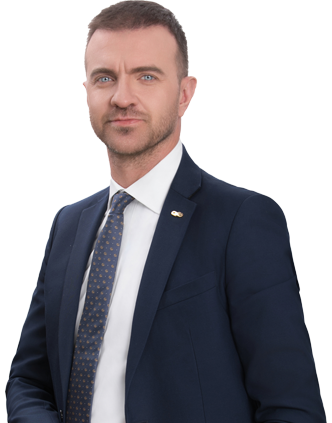
Carlo Diego D’Andrea
Mr. Carlo D'Andrea, the Founder and Managing Partner of D'Andrea & Partners Legal Counsel and D’Andrea & Partners Group
The UAE attracts over 30 billion dollars in annual FDI. For institutional investors and multinational corporations, properly structuring an M&A deal here is not a detail—it is the difference between creating and destroying value. The mergers and acquisitions market in the United Arab Emirates underwent a transformation between 2021 and 2025, evolving from a peripheral
As of March 2026, the investment relationship between the UAE and Europe has undergone a fundamental and largely irreversible transformation. What was once characterized by headline-grabbing acquisitions of luxury hotels, football clubs, and prestige real estate — the “trophy asset” era that defined Emirati capital deployment throughout the 2010s — has given way to something
Despite uncertain times, in the first quarter of 2026, Dubai has cemented its status as the world’s third most startup-friendly city, trailing only San Francisco and Zurich. This ascent is no accident. It is the product of a deliberate, multi-year overhaul of corporate regulation, fiscal policy, and infrastructure — a transformation that has repositioned the
#UAE
#investment #Corporate #Banking
Manage Consent
To provide the best experiences, we use technologies like cookies to store and/or access device information. Consenting to these technologies will allow us to process data such as browsing behavior or unique IDs on this site. Not consenting or withdrawing consent, may adversely affect certain features and functions.
Functional
Always active
The technical storage or access is strictly necessary for the legitimate purpose of enabling the use of a specific service explicitly requested by the subscriber or user, or for the sole purpose of carrying out the transmission of a communication over an electronic communications network.
Preferences
The technical storage or access is necessary for the legitimate purpose of storing preferences that are not requested by the subscriber or user.
Statistics
The technical storage or access that is used exclusively for statistical purposes.The technical storage or access that is used exclusively for anonymous statistical purposes. Without a subpoena, voluntary compliance on the part of your Internet Service Provider, or additional records from a third party, information stored or retrieved for this purpose alone cannot usually be used to identify you.
Marketing
The technical storage or access is required to create user profiles to send advertising, or to track the user on a website or across several websites for similar marketing purposes.
To provide the best experiences, we use technologies like cookies to store and/or access device information. Consenting to these technologies will allow us to process data such as browsing behavior or unique IDs on this site. Not consenting or withdrawing consent, may adversely affect certain features and functions.
Functional
Always active
The technical storage or access is strictly necessary for the legitimate purpose of enabling the use of a specific service explicitly requested by the subscriber or user, or for the sole purpose of carrying out the transmission of a communication over an electronic communications network.
Preferences
The technical storage or access is necessary for the legitimate purpose of storing preferences that are not requested by the subscriber or user.
Statistics
The technical storage or access that is used exclusively for statistical purposes.The technical storage or access that is used exclusively for anonymous statistical purposes. Without a subpoena, voluntary compliance on the part of your Internet Service Provider, or additional records from a third party, information stored or retrieved for this purpose alone cannot usually be used to identify you.
Marketing
The technical storage or access is required to create user profiles to send advertising, or to track the user on a website or across several websites for similar marketing purposes.