In this article, we summarize the some of the legislative amendments that would happen in Kazakhstan from January 1, 2021.
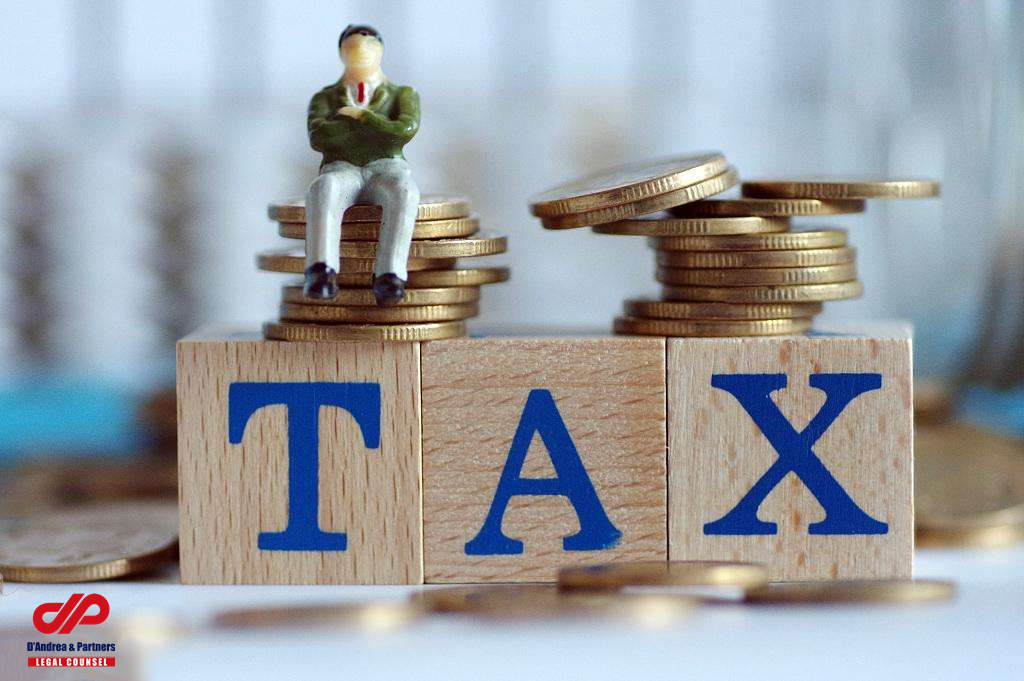
3% Retail Tax instead of Personal and Corporate Income Tax
December 10, 2020, President of Kazakhstan signed the Law on Amendments to the Tax Code of theRepublic of Kazakhstan and to the Law on Introduction of theTax Code of the Republic of Kazakhstan (No. 382-VI), hereinafter referred to “Law No. 382-VI”. Law No. 382-VI introduces a new special tax regime for the small and medium-sized businesses affected by the pandemic.
Companies and individual entrepreneurs that successfully applied for the new special tax regime will be subject to alternative Retail Tax (3%) instead of the Corporate Income Tax (10-20%) and the Individual Income Tax (10%) till December 31, 2022. Moreover, companies will be exempted from VAT and Social Tax.
Universal Income and Property Declaration
From January 1, 2021, the Republic of Kazakhstan will introduce the universal income and property declaration system in order to combat the shadow economy and corruption.
Foreign citizens also may be the subject of declaration procedures where they have real estate property or a share in housing construction on the territory of Kazakhstan.
Increased Requirements for The Dispatched Labor
In particular, amendments to the Labor Code prohibited discrimination in terms of remuneration against dispatched employees.
Amendments also provide for guarantee of additional paid annual leave for dispatched employees who engaged in heavy work or work with harmful or dangerous working conditions. This kind of dispatched employees also will be entitled for the increased remuneration and reduced working hours.
Mandatory Labeling of Goods
March 1, 2019, the Republic of Kazakhstan ratified the Agreement on Labelling Goods with Means of Identification on the Territory of the Eurasian Economic Union. As part of the implementation of the provisions of the Agreement, Kazakhstan has joined the key decisions of the Eurasian Economic Commission on the labeling of fur products, footwear products, perfumes and tires.
Generally, the labeling system is aimed at combating shadow economy, protection of the domestic market from low-quality products, and improvement of the competitiveness of Kazakhstan’s producers.
Note: Marking of the products implies placing on the surface of the commodities package of a special encrypted label that contains information about the manufacturer, serial number and anti-hacking code.
As a result of the successful implementation of two-year pilot projects, Kazakhstan already introduced mandatory labeling for natural fur products (from March 1, 2019) and tobacco products (from October 1, 2020).
At date Kazakhstan is pursuing pilot projects for four other categories of products and two of them will follow under the requirement of mandatory labeling system in upcoming 2021:
alcoholic beverages: implementation of mandatory labeling is scheduled for April 1, 2021;
footwear products: implementation of mandatory labeling is scheduled for July 1, 2021;
medicines: implementation of mandatory labeling is scheduled for January 1, 2022;
dairy products: implementation of mandatory labeling is scheduled for January 1, 2022.
Producers of aforementioned products distributed in Kazakhstan will be required to register at authorities, obtain marking codes for their products and introduce the system of marking of the products by aforementioned codes. Importers, distributors and retailers also will have to register at authorities and introduce the scanning systems.
In case you have questions or would like to receive more information on the aforementioned regulations D’Andrea & Partners team would be glad to help you. Do not hesitate to contact us via russiadesk@dandreapartners.com.
Since the start of military operations in Ukraine, the European Union has imposed sanctions against Russia, with the seventh package of sanctions already implemented. In addition, from February 24th to August 2022, more than 1,000 foreign companies have left Russia or suspended their operations in the country. To avoid a shortage of goods, the Russian
Several months have passed since the beginning of Russia’s special military operation, and the European Union has introduced several packages of sanctions against Russia. The latest sixth package of sanctions was introduced on June 1st, 2022. In this article, we will consider and evaluate the impact of sanctions on the Russian economy. Introduction The unprecedented
Special Administrative Region Within this article, we shall continue our series of articles exploring “How to Conduct Economic Activities” in the Far Eastern and Siberian region of Russia! Link to previous articles: Free Port Vladivostok #FPV https:https://dandrea.flow-project.com/free-port-vladivostok/ Advanced Special Economic Zones #ASEZ https:https://dandrea.flow-project.com/advanced-special-economic-zone-in-siberia-and-far-east-of-russia/ What is a Special Administrative Region SAR? A Special Administrative Region (#SAR)
#Russian Desk
Manage Consent
To provide the best experiences, we use technologies like cookies to store and/or access device information. Consenting to these technologies will allow us to process data such as browsing behavior or unique IDs on this site. Not consenting or withdrawing consent, may adversely affect certain features and functions.
Functional
Always active
The technical storage or access is strictly necessary for the legitimate purpose of enabling the use of a specific service explicitly requested by the subscriber or user, or for the sole purpose of carrying out the transmission of a communication over an electronic communications network.
Preferences
The technical storage or access is necessary for the legitimate purpose of storing preferences that are not requested by the subscriber or user.
Statistics
The technical storage or access that is used exclusively for statistical purposes.The technical storage or access that is used exclusively for anonymous statistical purposes. Without a subpoena, voluntary compliance on the part of your Internet Service Provider, or additional records from a third party, information stored or retrieved for this purpose alone cannot usually be used to identify you.
Marketing
The technical storage or access is required to create user profiles to send advertising, or to track the user on a website or across several websites for similar marketing purposes.
To provide the best experiences, we use technologies like cookies to store and/or access device information. Consenting to these technologies will allow us to process data such as browsing behavior or unique IDs on this site. Not consenting or withdrawing consent, may adversely affect certain features and functions.
Functional
Always active
The technical storage or access is strictly necessary for the legitimate purpose of enabling the use of a specific service explicitly requested by the subscriber or user, or for the sole purpose of carrying out the transmission of a communication over an electronic communications network.
Preferences
The technical storage or access is necessary for the legitimate purpose of storing preferences that are not requested by the subscriber or user.
Statistics
The technical storage or access that is used exclusively for statistical purposes.The technical storage or access that is used exclusively for anonymous statistical purposes. Without a subpoena, voluntary compliance on the part of your Internet Service Provider, or additional records from a third party, information stored or retrieved for this purpose alone cannot usually be used to identify you.
Marketing
The technical storage or access is required to create user profiles to send advertising, or to track the user on a website or across several websites for similar marketing purposes.